Get Free Ebook A History of the World in 6 Glasses, by Tom Standage
It can be among your early morning readings A History Of The World In 6 Glasses, By Tom Standage This is a soft data book that can be survived downloading from on-line publication. As known, in this advanced era, technology will relieve you in doing some activities. Also it is just reading the existence of publication soft data of A History Of The World In 6 Glasses, By Tom Standage can be extra attribute to open up. It is not only to open up and save in the gadget. This time around in the early morning as well as various other leisure time are to review the book A History Of The World In 6 Glasses, By Tom Standage
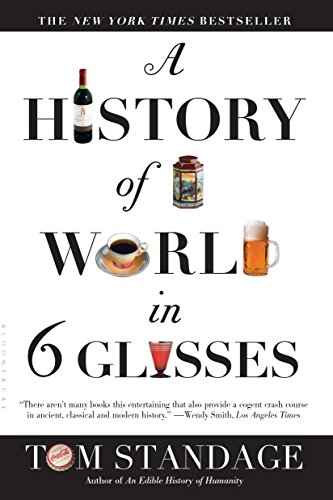
A History of the World in 6 Glasses, by Tom Standage

Get Free Ebook A History of the World in 6 Glasses, by Tom Standage
A History Of The World In 6 Glasses, By Tom Standage. Someday, you will certainly discover a brand-new journey and also understanding by investing more cash. However when? Do you believe that you should get those all requirements when having much cash? Why don't you aim to get something easy in the beginning? That's something that will lead you to understand even more regarding the world, experience, some areas, past history, home entertainment, and a lot more? It is your own time to continue checking out practice. One of the publications you can appreciate now is A History Of The World In 6 Glasses, By Tom Standage here.
As one of the home window to open the new globe, this A History Of The World In 6 Glasses, By Tom Standage supplies its fantastic writing from the writer. Published in among the preferred publishers, this publication A History Of The World In 6 Glasses, By Tom Standage turneds into one of the most needed books recently. In fact, guide will certainly not matter if that A History Of The World In 6 Glasses, By Tom Standage is a best seller or otherwise. Every book will consistently offer ideal sources to get the viewers all finest.
Nevertheless, some individuals will seek for the very best vendor publication to read as the initial reference. This is why; this A History Of The World In 6 Glasses, By Tom Standage exists to fulfil your necessity. Some individuals like reading this publication A History Of The World In 6 Glasses, By Tom Standage as a result of this preferred publication, yet some love this due to preferred writer. Or, several also like reading this book A History Of The World In 6 Glasses, By Tom Standage because they actually should read this book. It can be the one that truly like reading.
In getting this A History Of The World In 6 Glasses, By Tom Standage, you may not still pass strolling or using your motors to the book establishments. Obtain the queuing, under the rainfall or very hot light, and also still search for the unknown publication to be during that book shop. By visiting this web page, you can just search for the A History Of The World In 6 Glasses, By Tom Standage and also you can find it. So now, this time around is for you to go with the download web link as well as acquisition A History Of The World In 6 Glasses, By Tom Standage as your personal soft file publication. You can read this book A History Of The World In 6 Glasses, By Tom Standage in soft file only and wait as yours. So, you don't need to fast put guide A History Of The World In 6 Glasses, By Tom Standage right into your bag everywhere.
From beer to Coca-Cola, the six drinks that have helped shape human history.
Throughout human history. certain drinks have done much more than just quench thirst. As Tom Standage relates with authority and charm, six of them have had a surprisingly pervasive influence on the course of history, becoming the defining drink during a pivotal historical period.
A History of the World in 6 Glasses tells the story of humanity from the Stone Age to the 21st century through the lens of beer, wine, spirits, coffee, tea, and cola. Beer was first made in the Fertile Crescent and by 3000 B.C.E. was so important to Mesopotamia and Egypt that it was used to pay wages. In ancient Greece wine became the main export of her vast seaborne trade, helping spread Greek culture abroad. Spirits such as brandy and rum fueled the Age of Exploration, fortifying seamen on long voyages and oiling the pernicious slave trade. Although coffee originated in the Arab world, it stoked revolutionary thought in Europe during the Age of Reason, when coffeehouses became centers of intellectual exchange. And hundreds of years after the Chinese began drinking tea, it became especially popular in Britain, with far-reaching effects on British foreign policy. Finally, though carbonated drinks were invented in 18th-century Europe they became a 20th-century phenomenon, and Coca-Cola in particular is the leading symbol of globalization.
For Tom Standage, each drink is a kind of technology, a catalyst for advancing culture by which he demonstrates the intricate interplay of different civilizations. You may never look at your favorite drink the same way again.
- Sales Rank: #32056 in eBooks
- Published on: 2009-05-26
- Released on: 2009-05-26
- Format: Kindle eBook
From Publishers Weekly
Starred Review. Standage starts with a bold hypothesis—that each epoch, from the Stone Age to the present, has had its signature beverage—and takes readers on an extraordinary trip through world history. The Economist's technology editor has the ability to connect the smallest detail to the big picture and a knack for summarizing vast concepts in a few sentences. He explains how, when humans shifted from hunting and gathering to farming, they saved surplus grain, which sometimes fermented into beer. The Greeks took grapes and made wine, later borrowed by the Romans and the Christians. Arabic scientists experimented with distillation and produced spirits, the ideal drink for long voyages of exploration. Coffee also spread quickly from Arabia to Europe, becoming the "intellectual counterpoint to the geographical expansion of the Age of Exploration." European coffee-houses, which functioned as "the Internet of the Age of Reason," facilitated scientific, financial and industrial cross-fertilization. In the British industrial revolution that followed, tea "was the lubricant that kept the factories running smoothly." Finally, the rise of American capitalism is mirrored in the history of Coca-Cola, which started as a more or less handmade medicinal drink but morphed into a mass-produced global commodity over the course of the 20th century. In and around these grand ideas, Standage tucks some wonderful tidbits—on the antibacterial qualities of tea, Mecca's coffee trials in 1511, Visigoth penalties for destroying vineyards—ending with a delightful appendix suggesting ways readers can sample ancient beverages. 24 b&w illus.
Copyright © Reed Business Information, a division of Reed Elsevier Inc. All rights reserved.
From Booklist
Historian Standage explores the significant role that six beverages have played in the world's history. Few realize the prominence of beer in ancient Egypt, but it was crucial to both cultural and religious life throughout the Fertile Crescent, appearing even in the Gilgamesh epic. Wine's history has been recounted in many places, and its use to avoid often--polluted water supplies made it ubiquitous wherever grapes could be easily cultivated. Spirits, first manufactured by Arabs and later rejected by them with the rise of Islam, played a fundamental role in the ascendance of the British navy. As a stimulant, coffee found no hostility within Islam's tenets, and its use spread as the faith moved out of Arabia into Asia and Europe. Tea enjoyed similar status, and it bound China and India to the West. Cola drinks, a modern American phenomenon, relied on American mass-marketing skills to achieve dominance. An appendix gives some modern sources for some of the primitive beers and wines described in the text. Mark Knoblauch
Copyright © American Library Association. All rights reserved
Review
"Standage starts with a bold hypothesis---that each epoch, from the Stone Age to the present, has had its signature beverage---and takes readers on an extraordinary trip through world history." ---Publishers Weekly Starred Review
Most helpful customer reviews
4 of 4 people found the following review helpful.
This was definitely my favorite chapter. If you are not familiar with the ...
By J.K. Turner
First of all, it isn't a history of each individual beverage, though there is plenty of that, but a history of the world (as the title indicates) viewed through the lens of what (and why) people were drinking at the time. The drinks and the times they represent are:
Beer - probably the oldest known drink, popular in Mesopotamia and Egypt. Likely made/discovered by accident, at some unknown time far in the distant past. One of the main benefits it had on society was that you must boil water to make it. This had the affect of water purification and a decrease in waterborne illness. Interesting notes about how it was used as currency and given as rations to soldiers and slaves.
Wine - Our next step in history (Western, at least) is to move north to Greece and then Rome. Wine was viewed as the sophisticated drink and being a wine civilized, educated and wealthy (the more things change...). The sections about the drinking parties are fascinating, with all the ritual and impact on democracy they had. Tangentially related, I grew up in a church that served grape juice for the Lord's Supper. People would argue that we should have wine, as Jesus turned water into wine, etc. but the common retort was well, wine was weaker then. Turns out, this is actually kind of true. It was made the same as today, but watered down. It was considered crass to drink wine straight. Who knew? I assumed they were just pulling something out of their asses, on the other hand, they could have just watered it down, but I digress.
Spirits- specifically whisky and rum, my personal favorites, though there is also gin and brandy that play a major role. This is the era of exploration and colonization. Beer & wine were expensive to ship and didn't always keep on the voyage across the Atlantic. Distilled spirits would, and quickly replaced beer as the rations for soldiers. Incidentally, to flavor the harsh drinks, they'd add lime juice, which would help prevent scurvy. He also goes into detail about the triangle of slave trade where slaves would be taken to the islands where they'd be traded for sugar, sugar was then taken to Boston to produce rum, the rum was then traded to Africans for more slaves. And of course, the Whisky Rebellion - the first major attempt to raises taxes in America and one of the first violent threat from within, all due to homemade whisky.
Coffee - The age of reason and the enlightenment. This was definitely my favorite chapter. If you are not familiar with the impact that coffee had on the move to the industrial revolution, the book is worth the cost for this chapter alone. Basically, we'd all walk around half drunk all day. People often had beer (weak, but still) for breakfast because it was safer than water. Your precision in operating machinery or your output at a factory is greatly diminished when you've been drinking. Once you are caffeinated, however, then you are alert, focused, and ready to go. Also, the interesting impact on enlightenment and revolutions, as discussion moved from pubs and taverns to coffee houses.
Tea - Mostly focused on the British empire, there is still a cool history behind tea in the East that he dives in to. Some of the more interesting things to come out of this history is the impact of people working out of Tea Shops. People would often use the place for meetings and have mail sent there. Because the shops were located near places of work, there would often be a certain industry focus. Proprietors would put shipping information or stock prices on boards. Manuscripts were circulated and critiqued. Lloyd's of London and the London Stock Exchange both started as or at tea shops. Twining's, The Wife's favorite, started almost 400 years ago and may be the oldest official logo still in use. Speaking of women, unlike coffee shops, they were allowed in tea shops which had some interesting impacts, such as the little boxes, sometimes with locks, that teas are still kept in today.
Coco-Cola - or Coke here in the South. This chapter follows the rise of America and The American Century; also 'Murica, to a lesser extent. The history is kind of crazy, to think about the number of people running around selling random drinks that are dangerous for you, even though they make wild health benefit claims. Then again, this is still happening, and is completely unregulated,(so, again, the more things change...). Overall fairly interesting, but probably more known by most people (at least Americans) but some great and funny anecdotes. Such as the Russian general who couldn't been seen drinking Coke, even though he loved it, because it was associated with capitalism. So, Coke hooks him up and make clear Coke, puts it in a different bottle to look like vodka and sends it to him. Interesting stuff about Coke embodying capitalist ideals to many communist countries.
Overall, definitely worth picking up somewhere. Very well written and interesting book, especially if you are a big history nerd.
[...]
2 of 2 people found the following review helpful.
An excellent micro-history that views the world through the lens of what we drink
By Bernie Gourley
As the author points out, there’s a natural subdivision to the book, which is that the first three beverages are alcoholic and the last three are caffeinated. There’s another way of looking at it, and that’s the means used to achieve a drink that wasn’t a health hazard. The first three drinks achieve germ-killing by fermentation, the next two by boiling, and the last through technology.
The era of beer is associated with the Agricultural Revolution and the growing importance of cereal grains. Geographically, the region of focus is the Fertile Crescent and Egypt. Among the more interesting points of discussion is the role of beer (along with the related commodities of cereal grains and bread) in the development of written language.
The era of wine is associated with the civilizations of ancient Greece and Rome. Readers of the classics will be aware that wine was much celebrated among the Greeks and Romans, so much so that they developed gods of wine in their mythologies (Dionysus and Bacchus, respectively.) Of course, wine played no small role in Christian mythology as well--e.g. Jesus turns water to wine.
Spirits are related to the Colonial period, though they were first developed much earlier. The author emphasizes that these were the first global drinks. While beer and wine were robust to going bad, they could spoil in the course of long sea voyages.
Alcohol of all kinds has always attracted opposition. This conflict, of course, owes to the fact that people under the influence of alcohol frequently act like idiots. One might expect that the transition to discussion of non-alcoholic beverages would correspond to the end of controversy, but that’s not the case. Each of the beverages brought controversy in its wake. There were attempts to ban coffee in the Islamic world where its stimulative effect was conflated with intoxication. Coca-Cola became associated with capitalism and American influence, and drew its own opposition because of it. It seems there’s no escape from controversy for a good beverage.
The most fascinating discussion of coffee had to do with the role of cafés as corollaries to the internet. Centuries before computers or the internet as we know it, people went to cafés to find out stock values and commodity prices, to discuss scholarly ideas, and to find out which ships had come and gone from port.
The role of tea in world history is readily apparent. Besides the aforementioned Boston Tea Party, there were the Opium Wars. This conflict resulted from the fact that the British were racking up a huge tea bill, but the Chinese had minimal wants for European goods. Because the British (through the East India Company) didn’t want to draw down gold and silver reserves, they came up with an elaborate plan to sell prohibited opium in China in order to earn funds to pay their tea bill. Ultimately, Britain’s tea addiction led to the growing of tea in India to make an end-run around the volatile relations with China.
The book lays out the history of Coca-Cola’s development before getting into its profound effect on international affairs. A large part of this history deals with the Cold War years. While Coca-Cola was developed in the late 19th century, it was really the latter half of the 20th century when Coke spread around the world—traveling at first with US troops. The most interesting thing that I learned was that General Zhukov (a major Soviet figure in the winning of World War II) convinced the US Government to get Coca-Cola incorporated to make him some clear Coca-Cola so that he could enjoy the beverage without the heart-burn of being seen as publicly supporting an American entity (i.e. it would look like he was drinking his vodka, like a good Russian should.) General Zhukov was perhaps the only person to stand in opposition to Stalin and live (the General was just too much of a national hero to screw with.)
There’s also an interesting story about how the cola wars played out in the Middle East. Both Coke and Pepsi wanting access to the large Arab market, and were willing to forego the small Israeli market to pave the way for that access. When Coke finally had to relent due to public outrage and accusations of anti-Semitic behavior, Pepsi slid in and followed Coca-Cola’s policy of snubbing Israel in favor of the Arab world.
I enjoyed this book, and think that any history buff will as well. One doesn’t have to have a particular interest in food and beverage history to be intrigued by stories contained in this book.
1 of 1 people found the following review helpful.
neat history, with a few caveats
By Patrick T. Peterson
The book is a bit presumptuous in stating it is a "History of the World..." or that the six drinks have "defined humankind's past." But that should not stop one from reading it.
While more open to a decent view of history regarding capitalism, free markets and property rights, than many (most?) history books, the author still promoted some egregious ideas, if not completely foolish, by giving them equal or more time vs. more sound ideas and facts.
The author needs to explore the idea that all these beverages are/were, in effect, private, not "public" or government created or owned. His epilogue could have been far more informed and informative on the subject of the modern situation of water issues, if he had explored the crucial nature of privatization in man's need for a quality beverage that does not poison him/her, or is of reasonable expense or is available to but not wasted by virtually everyone.
The definition of imperialism is likewise not one of the strong suits of the author. His never defining it clearly but none-the-less using its corrupted meaning by communist ideology was very unhelpful. He only tacitly used a definition that has twisted the word with pretzel logic to include non-coercive private firms' actions (but NOT include Soviet or other communist foreign aggression) and that is worse than just sad. He is not as bad as many on this score, since he also made fun of the various communist groups' ridiculous attacks on Coca-Cola, much to the detriment of their comrade citizens in the various countries he names. But still, being muddled on this important concept has significant repercussions.
There are other words, incidents, trends, etc. that the author could help the reader by not using, or at least defining carefully (`consumerism,' for one), but I just state again, the book has lots to recommend it and I enjoyed and learned a bunch from it overall.
A History of the World in 6 Glasses, by Tom Standage PDF
A History of the World in 6 Glasses, by Tom Standage EPub
A History of the World in 6 Glasses, by Tom Standage Doc
A History of the World in 6 Glasses, by Tom Standage iBooks
A History of the World in 6 Glasses, by Tom Standage rtf
A History of the World in 6 Glasses, by Tom Standage Mobipocket
A History of the World in 6 Glasses, by Tom Standage Kindle

Tidak ada komentar:
Posting Komentar